
When the Air Feels Like It’s Stealing Your Comfort
You wake up with a scratchy throat. Your hands feel like sandpaper no matter how much lotion you use. A spark jumps from your fingertips every time you touch a light switch. Even your houseplants, the ones you faithfully water, seem to be giving up.
Most of us shrug and blame “winter air” or “the season,” but the truth is more complicated. Dry air isn’t just a seasonal inconvenience; it’s a symptom of an imbalance in your home’s environment. And in many cases, it’s a problem you can fix.
At the Mold Facts, we talk a lot about the dangers of excess moisture. But humidity that drops too low can be just as harmful to your comfort, your health, and even your home’s structural integrity. The sweet spot for indoor humidity is a narrow one, and understanding why the air dries out is the first step toward reclaiming it.
In this guide, we’ll unpack the hidden causes of dry air, explain why it matters for both people and property, and show how to spot and address the issue before it escalates.
Understanding Humidity & Why It Matters
Humidity isn’t just about whether the air feels “dry” or “sticky.” It’s actually the amount of water vapor floating around in the air, and it comes in two flavors:
- Relative Humidity (RH): How much moisture the air is holding compared to how much it could hold at a certain temperature.
- Absolute Humidity (dew point): The actual amount of water in the air, no matter the temperature.
Here’s the twist: warm air can hold more moisture than cold air. That’s why the same amount of water vapor can feel comfortable in summer but desert-like in winter.
CDC/NIOSH research shows dry indoor air can sap comfort and workplace well-being, while Harvard Health points out that indoor air quality often worsens in winter not just because of the cold, but because it’s both dry and stale.
The EPA and ASHRAE recommend keeping indoor RH between 30–50%, and definitely below 60% to prevent mold growth. Too low and you risk nosebleeds, cracked wood, and irritated skin. Too high, and you’re inviting mold, dust mites, and a musty smell into your home.
Finding that “just right” balance protects not only your comfort but also your health and your home’s structure.
The Outdoor Causes of Dry Air
Sometimes, the air outside is already dry before it ever enters your home and the reasons are often seasonal or geographic.
Cold-season air: Cold air simply can’t hold as much water vapor as warm air. Its absolute humidity (actual water content) is low. When this cold air slips indoors and you heat it up, the relative humidity (RH) can plummet from comfortable to desert-dry in minutes.
High-pressure systems: Under a high-pressure dome, air sinks toward the ground. As it descends, it warms slightly, lowering RH even further. That’s why sunny, crisp winter days often feel dry even if it just snowed.
Foehn and downslope winds: In certain regions, winds tumble down mountainsides, compress, and warm rapidly in a process known as the Foehn effect (Met Office). The Santa Ana winds in Southern California are a famous example, with RH sometimes dipping into single digits outdoors.
Continental and desert air masses: Areas far from large water bodies, or in desert climates, often experience persistent dryness year-round. Even in summer, outdoor RH can be very low, especially during hot afternoons.
Knowing these natural drivers matters because they set the baseline humidity your home starts with. If the outside air is already dry, indoor heating or cooling will intensify the effect, thus making it even more important to add and manage moisture inside.
The Indoor Causes of Dry Air
While outdoor conditions set the stage, your home’s systems and structure determine how dry that air feels indoors and here’s where you can make a real difference.
Ventilation & infiltration: Every time cold outdoor air enters through cracks, gaps, or duct leaks, it brings its low moisture content with it. In winter, the stack effect (warm air rising and escaping at the top of your home) can pull in even more dry air at the bottom.
Heating systems: Furnaces, baseboard heaters, and space heaters warm the air without adding any moisture. As the temperature rises, RH falls, sometimes to under 20%, which can dry out skin, sinuses, and wooden furniture.
HVAC mode settings: Running your system’s fan continuously (instead of “Auto”) can cause your furnace or AC to circulate air in ways that reduce humidity control, especially if the ductwork passes through cold or dry spaces.
Air conditioning in dry climates: ACs remove both sensible heat (temperature) and latent heat (moisture). In already-dry regions, this can strip what little humidity remains, making indoor RH drop uncomfortably low even in summer.
Building envelope factors: Poor insulation, single-pane windows, and unsealed penetrations (like plumbing and wiring holes) allow more infiltration of dry air. Well-sealed, well-insulated homes hold onto humidity better but also require balanced ventilation to prevent stale air.
By pinpointing these controllable factors, you can take steps, from sealing drafts to adjusting HVAC settings, to keep your home’s humidity in the EPA-recommended 30–50% comfort zone, even when the outdoor air isn’t cooperating.
Health, Comfort & Home Risks of Dry Air
Dry air isn’t just a seasonal inconvenience; it can quietly undermine both your well-being and your home’s integrity.
Health impacts are often the first to show. When humidity drops below optimal levels (generally 30–50% RH), moisture evaporates faster from skin and mucous membranes. The result: dry, itchy skin, chapped lips, irritated eyes, and a scratchy throat. For those with allergies or asthma, low humidity can intensify symptoms, as dry air irritates airways and increases the circulation of dust and allergens. The CDC and NIOSH note that raising humidity into a moderate range can reduce these complaints significantly.
Home impacts may be slower to notice but just as damaging. Wood flooring and furniture can warp or crack. Paint may peel or flake sooner than expected. Static electricity builds up easily, causing annoying shocks and potentially damaging sensitive electronics. Even your houseplants can suffer by drooping, browning, or dropping leaves when the air is too dry.
The mold twist surprises many: while mold thrives in damp conditions, overly dry air can create its own problems. Dust, pet dander, and fine particles linger longer in the air, reducing indoor air quality. This imbalance underscores a key fact: balanced RH protects both people and property.
By recognizing these risks, homeowners can treat dry air as a year-round comfort and health concern, not just a winter nuisance.
How to Identify if Your Home’s Air Is Too Dry
You don’t need a lab to figure out if your indoor air is parched. Your body and your home will tell you. Common physical signs include cracked or peeling lips, frequent nosebleeds, dry, itchy skin, and more static shocks than usual when touching doorknobs or electronics. You might also notice increased coughing or irritated eyes, especially in winter when heating systems run constantly.
Your home can show symptoms too. Gaps may appear between wooden floorboards or along trim as wood contracts. Furniture or musical instruments might warp or creak more. Houseplants wither despite regular watering, and paper items like books may curl at the edges.
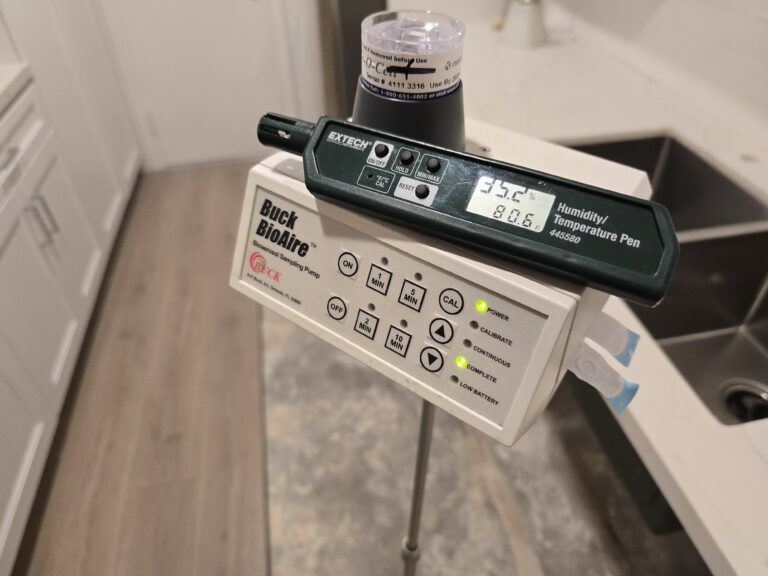
For a clear answer, use a hygrometer, a small, inexpensive device that measures relative humidity (RH). The EPA and ASHRAE recommend keeping indoor RH between 30–50% for comfort and health, and under 60% to avoid mold growth. If readings are consistently below 30%, your air is too dry, and you may need to take corrective steps.
Where Causes Overlap and Why That Matters
Dry indoor air rarely has a single culprit. More often, it’s the result of several factors working together, each amplifying the others.
For example, picture a drafty house in a cold climate during a high-pressure ridge. Outdoor air is already low in humidity, leaks pull that air in, and heating strips away what little moisture is left. The result? A triple hit to your indoor RH.
Or consider a home with constant heating and a continuous HVAC fan in an area with low outdoor dew points. The moving air speeds up evaporation from skin and surfaces, while heated air lowers relative humidity even further, creating a rapid “RH crash.”
That’s why tackling just one factor, like adding a humidifier, may bring only partial relief. The real fix is a holistic approach:
- Seal and insulate to reduce infiltration.
- Adjust HVAC settings and fan modes.
- Add moisture only when the building envelope and ventilation balance are in check.
Understanding the overlap effect means you’re not just treating symptoms, you’re fixing the system.
Final Word: A Balanced Home is a Healthy Home
Dry indoor air isn’t just “annoying.” It’s a red flag that your home’s environment is out of balance and that imbalance can chip away at your comfort, your health, and even your property’s lifespan.
From static shocks to shrinking woodwork, the symptoms are more than cosmetic. The same low relative humidity that cracks furniture can also irritate your eyes, nose, and skin and make you more vulnerable to seasonal illnesses.
The good news? A healthy balance is within reach. By understanding what causes dry air in the first place, you’re already halfway to a solution. Whether it’s sealing up air leaks, fine-tuning your HVAC, or adding the right amount of moisture, small changes can make a big difference.
FAQ: Understanding & Fixing Dry Indoor Air
Q: What’s the healthiest humidity level for my home?
HVAC experts recommend keeping indoor relative humidity between 30% and 50%. This range helps reduce dry air discomfort while minimizing mold and dust mite risks.
Q: Can dry air make me sick?
Yes, overly dry air can irritate your skin, throat, and nasal passages, making it easier for viruses to infect you. It can also trigger flare-ups in asthma and allergies.
Q: Is adding a humidifier the only fix?
Not always. Sealing air leaks, adjusting HVAC settings, and managing ventilation can often help without relying solely on humidifiers.
Q: Why is my home so dry in winter?
Cold outdoor air holds less moisture. When it’s heated indoors, the relative humidity drops quickly, especially if your home has leaks or unbalanced ventilation.
Next Steps: Keep Learning
Understanding dry air is just one step toward creating a healthier home. Explore more resources on related topics:
Smart seasonal tips to stop condensation, leaks, and stale air from fueling mold growth during cold months.
Find out which humidifier fits your space best without creating excess moisture that encourages mold.
Learn how to spot the sneaky leaks behind walls, ceilings, and floors that often spark hidden mold problems.
Understand how dust, mold, and poor ventilation worsen allergy symptoms and how to fight back.
See which everyday routines quietly raise mold risks in winter and how to adjust them for a healthier home.